
Yellow
Soiled dressings, anatomical waste and other designated yellow-category materials.
Different yellow-category wastes have specific treatment requirements.
Good segregation at your facility makes appropriate collection, treatment and disposal possible.
Use the correct bag or container where the waste is generated. These examples introduce the four biomedical waste categories; your facility’s procedures should cover the complete Schedule I requirements.
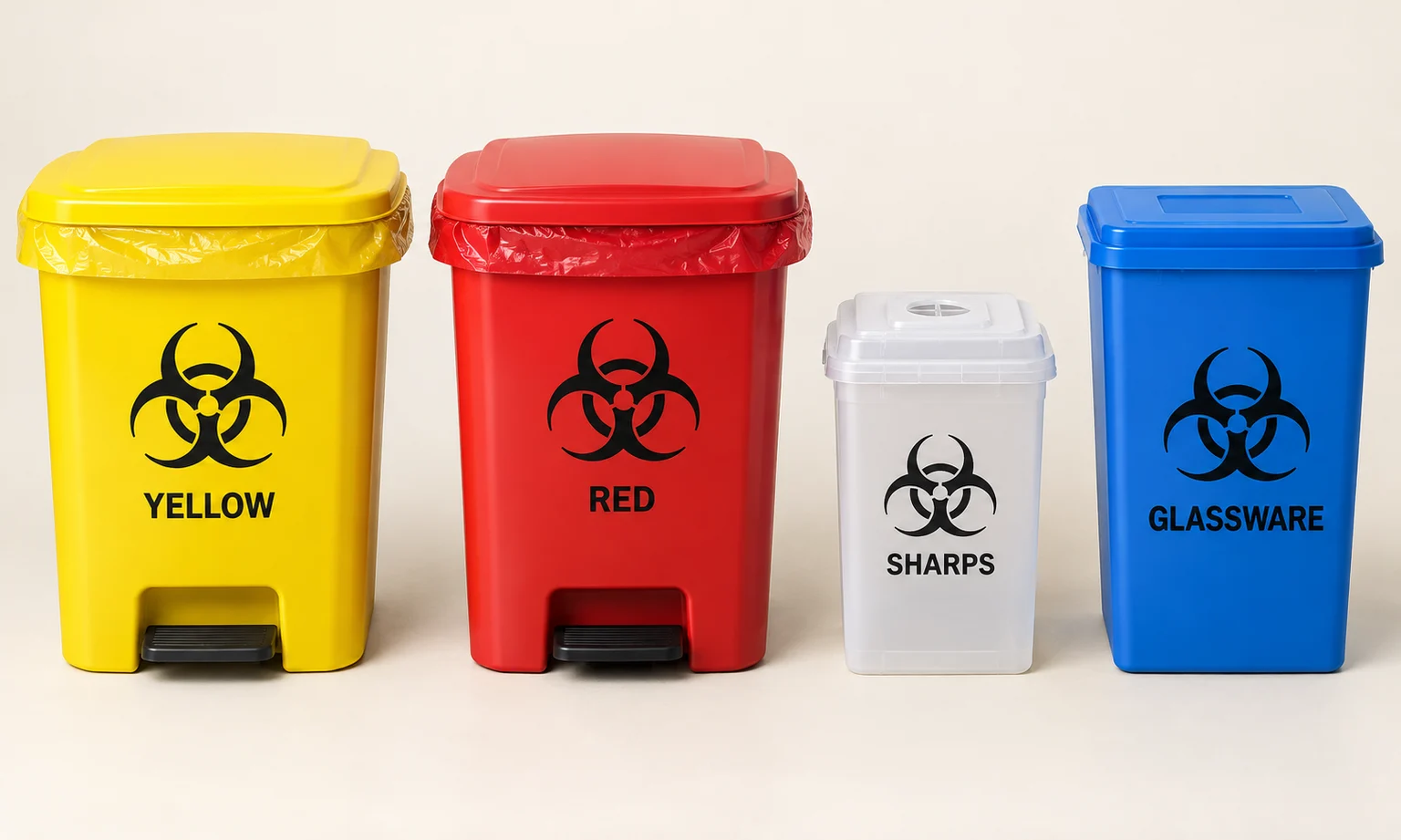
Soiled dressings, anatomical waste and other designated yellow-category materials.
Different yellow-category wastes have specific treatment requirements.
Contaminated recyclable plastics such as tubing and gloves.
Suitable materials are disinfected and shredded before authorised recovery.
Sharps, including needles and other contaminated metal sharps.
Use puncture-proof, leak-proof and tamper-proof containers.
Designated glassware and metallic implants.
Cytotoxic-contaminated glass belongs in its prescribed separate route.

Secure, labelled and barcoded packaging supports traceability. Keep biomedical waste separate from ordinary food waste, packaging and other general waste. Laboratory and microbiological waste requiring on-site pretreatment must be handled before collection.
Collection & transportationSegregated waste travels in dedicated, covered transport to the treatment facility.
The waste category determines the prescribed treatment, rather than a single method for everything.
Suitable treated materials follow authorised recovery routes; residues go for appropriate disposal.
Talk to our team about collection and your facility’s requirements.
Contact GlobalCollection questions, facility documents or a new association.
Contact our support team